7 Best Proxies for Web Scraping in 2026 (Pricing Compared)
7 Best Proxies for Web Scraping in 2026 (Pricing Compared)
Web ScrapingPythonData ExtractionWeb Scraping ToolsAPI
Your scraper isn't broken.
Your IPs are.
The code that worked perfectly on your laptop starts returning 403s, CAPTCHAs and empty pages the moment it runs at scale. You add retries. You add random delays. You rotate user agents. Nothing changes, because the target site isn't looking at your code. It's looking at where your requests come from.
If you're:
scraping prices, listings or search results every day,
feeding a RAG pipeline or an AI agent with fresh web data,
or running a data product that dies when one site blocks you,
picking the best proxies for web scraping is the decision that decides whether your pipeline survives.
I went through the pricing pages, plans and fine print of the providers developers actually use in 2026. Below you'll find the 7 that matter, what each one really costs (not the number in the banner), screenshots of every pricing page, and a Python script to benchmark them against your own target.
Why scrapers get blocked (and why retries don't fix it)
Modern anti-bot systems score every request. Three signals weigh more than anything in your code:
IP reputation: datacenter ranges from AWS, GCP or Hetzner are flagged by default on many sites.
Request volume per IP: 500 requests from one address in a minute is not a human.
Geo consistency: a "US shopper" coming from a Frankfurt server looks fake.
Retries just send the same suspicious request again.
Proxies fix the source. Your traffic exits through IPs that look like real users, spread across thousands of addresses, in the country you need.
Pick the proxy type before the provider
Here's the mistake I see constantly: people compare providers before deciding what kind of proxy they need. The type matters more than the brand.
Type
Where the IP comes from
Block resistance
Typical price
Use it for
Datacenter
Cloud/hosting servers
Low
Cents per IP
Sites with no anti-bot, APIs, testing
Residential (rotating)
Real home devices (opt-in)
High
$2–8/GB at small volume
E-commerce, SERPs, social, most scraping
ISP (static residential)
Residential IPs hosted in datacenters
High
From ~$1/IP
Logged-in sessions, accounts
Mobile
4G/5G carrier IPs
Very high
Usually the most expensive
The hardest targets, app APIs
For most scraping work in 2026 the answer is rotating residential proxies. That's what this comparison focuses on. Datacenter proxies still have a place (and they're almost free), which is why Webshare makes the list.
The proxy provider that's not on this list
This article originally had NetNut in it.
When I opened its pricing page to take the screenshot, this is what loaded: a domain seizure notice. On July 2, 2026, the FBI, working with Google, Lumen and the Shadowserver Foundation, seized domains of the NetNut residential proxy platform. Investigators tied it to Popa, a botnet built from roughly two million compromised consumer devices, mostly cheap smart TVs and streaming boxes (Krebs on Security has the full story).
Google said the operation caused "significant degradation" to the network. For anyone scraping through it, that's a pipeline that can stop working overnight.
The lesson isn't "residential proxies are shady." It's that where the IPs come from is now a technical requirement, not a marketing footnote. If a provider can't explain how its peers opted in, your pipeline is one court order away from going dark.
Before you sign up with any provider below, ask for the details: who the peers are, how they opted in, and whether they get paid.
Best proxies for web scraping: comparison table
Prices below are rotating residential, taken from each official pricing page on October 29, 2026 (Bright Data from its September 2026 page, more on that below).
Provider
Entry price
Best volume price
Pool (claimed)
Free trial / credit
Best for
Bright Data
$4/GB PAYG (promo, list $8)
$2.50/GB ($1,999/mo)
400M+ IPs
Free trial + deposit match
Enterprise scale
Oxylabs
$6/GB
$2.50/GB (1K+ GB)
Not on pricing page
$5 welcome credit
Reliability, big teams
Decodo
$3.75/GB (3 GB)
$2/GB (1 TB)
115M+ IPs
3-day trial, 100 MB
Best value overall
SOAX
$5/GB (free Sandbox)
from $0.85/GB
Not on pricing page
Free Sandbox plan
Residential + mobile, one rate
IPRoyal
$7/GB (1 GB)
$1.75/GB (10 TB)
64M+ IPs
No
Small, irregular projects
Webshare
$3.50/GB (1 GB)
$1.40/GB (3 TB)
80M+ IPs
10 free datacenter proxies
Budget & side projects
Rayobyte
$3.50/GB (PAYG)
$0.50/GB PAYG, $0.0095/GB Scale
50M+ devices/month
Free trial
High volume, low cost per GB
The real cost of 10 GB a month (a common size for a small production scraper):
Provider
Cheapest way to get 10 GB
Monthly cost
Webshare
10 GB plan at $2.75/GB
$27.50
Decodo
10 GB plan at $3.50/GB
$35
Rayobyte
Premium PAYG at $3.50/GB
$35
Bright Data
PAYG at $4/GB (promo)
$40 ($80 at list price)
IPRoyal
10 GB plan at $5.25/GB
$52.50
SOAX
Sandbox rate, Tier 1 at $5/GB
$50 (paid plans start at $200/mo)
Oxylabs
Basic plan ($100/mo, up to 20 GB at $5/GB)
$100
Same 10 GB. Almost 4x price difference.
That gap is why the headline "from $X/GB" number is the least useful thing on a proxy pricing page. The lowest rate always sits behind the biggest commitment.
The 7 best proxies for web scraping in 2026
1. Bright Data: the biggest network, built for enterprise
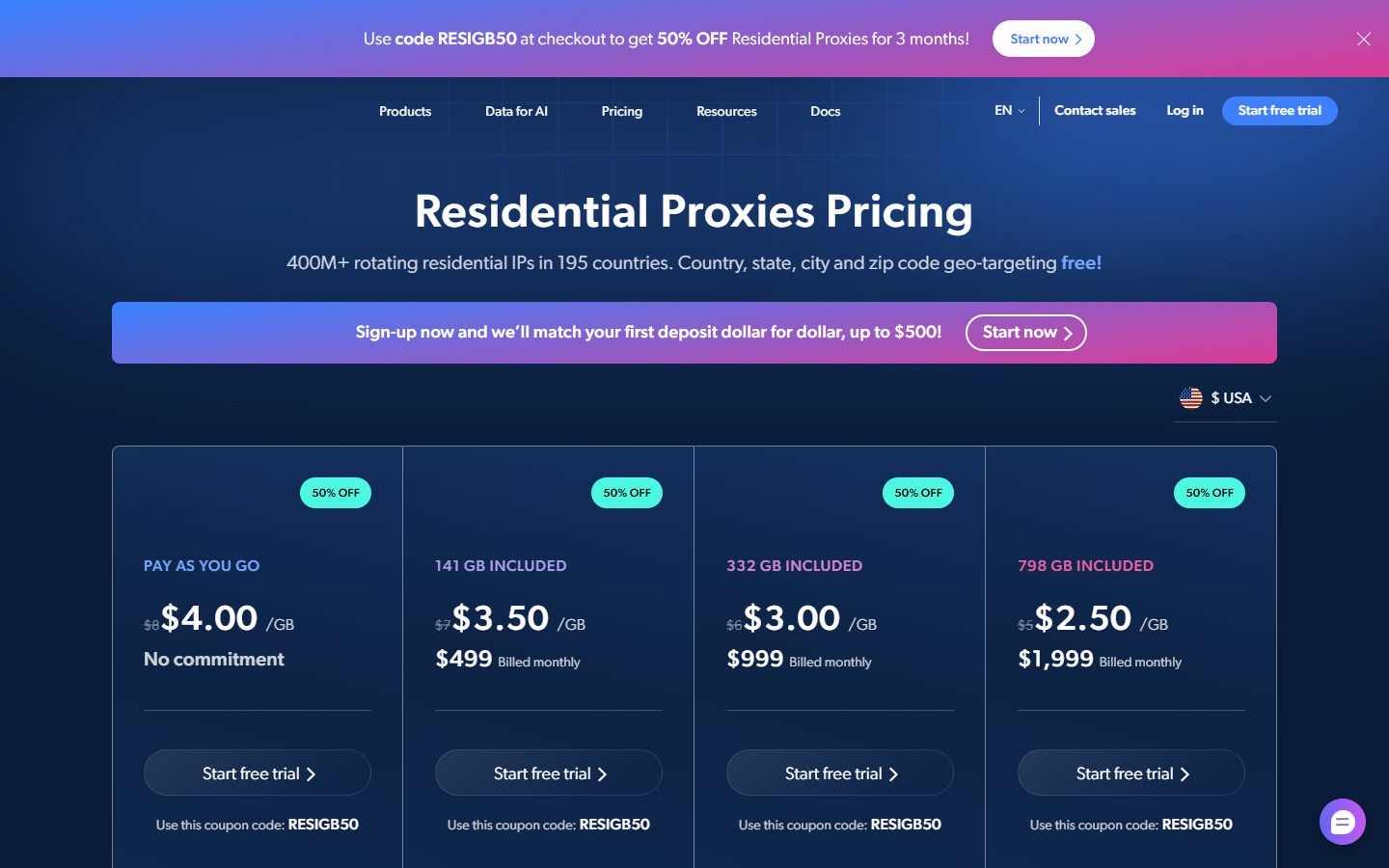
Bright Data is the largest player in the market, with 400M+ residential IPs across 195 countries and free geo-targeting down to city and ZIP code. On top of proxies, it sells a full scraping stack: unlocker API, scraping browser, SERP API and ready-made datasets.
Bright Data residential pricing (archived September 24, 2026). Its site was returning 502 errors when I checked on October 29, so prices may have changed.
Pros
Largest residential pool on this list, with ZIP-level targeting included
Known for a strict KYC and compliance process, which enterprise legal teams like
Committed plans drop to $2.50/GB ($1,999/mo for 798 GB)
Cons
List price is $8/GB; the $4/GB figure depends on a running 50% promo
The dashboard and product catalog are overwhelming for a small project
Best for:
Companies scraping at scale that need enterprise contracts, compliance paperwork and one vendor for everything.
2. Oxylabs: premium reliability with a simple pricing table
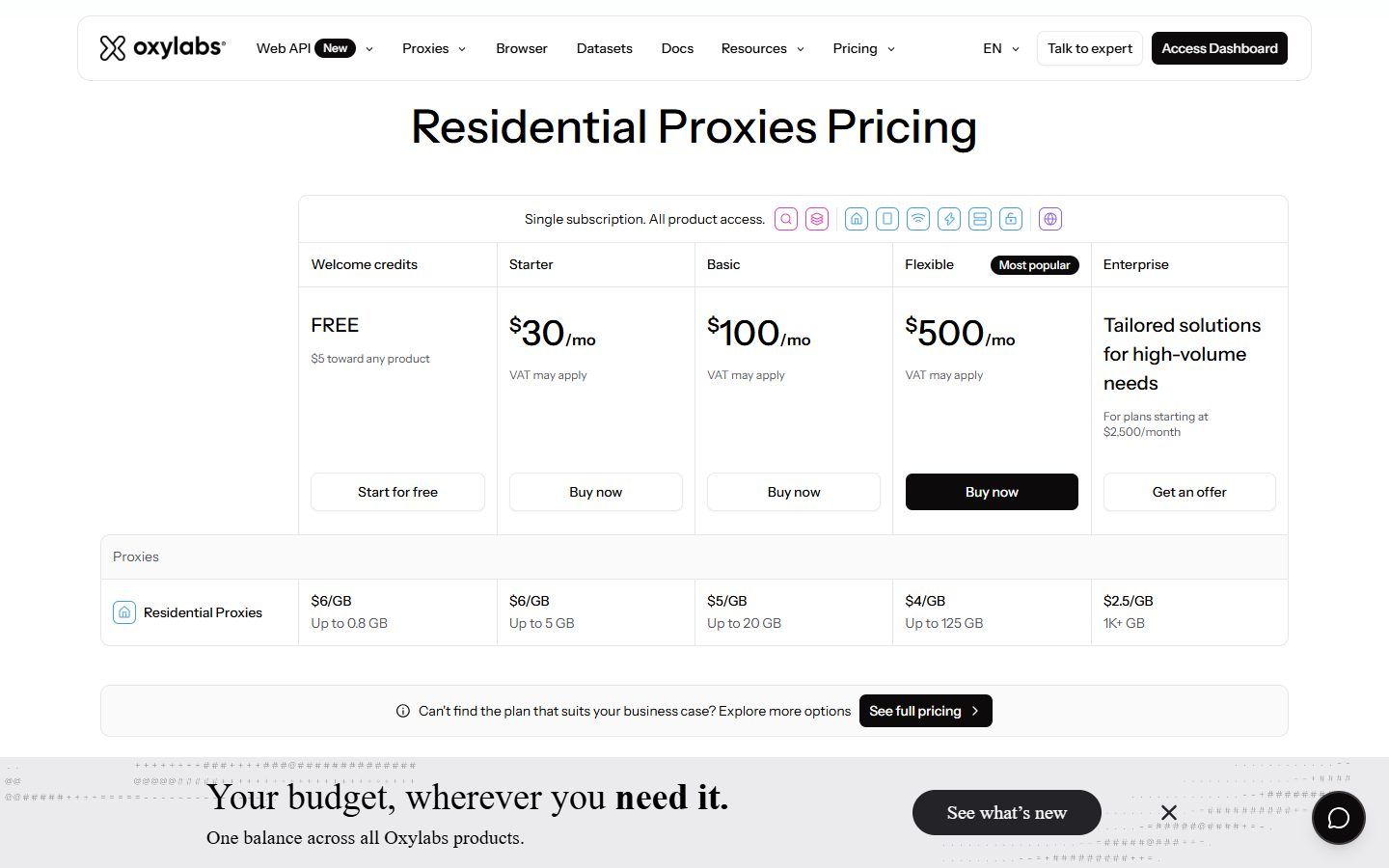
Oxylabs is Bright Data's main enterprise rival. Its pricing page is one of the clearest in the market: a single subscription that works across all products, with per-GB residential rates that fall as the plan grows.
Oxylabs residential pricing, October 29, 2026.
Pros
Unlimited concurrent sessions, HTTP(S), HTTP/3 and SOCKS5
Advertises a 0.6s average response time and 99.95% average success rate
$5 of free credit to test it before paying
Cons
$6/GB on small plans, among the most expensive at low volume
Enterprise pricing ($2.50/GB) only from $2,500/month
Best for:
Teams that value uptime and support over the lowest price per GB.
3. Decodo (formerly Smartproxy): best value overall
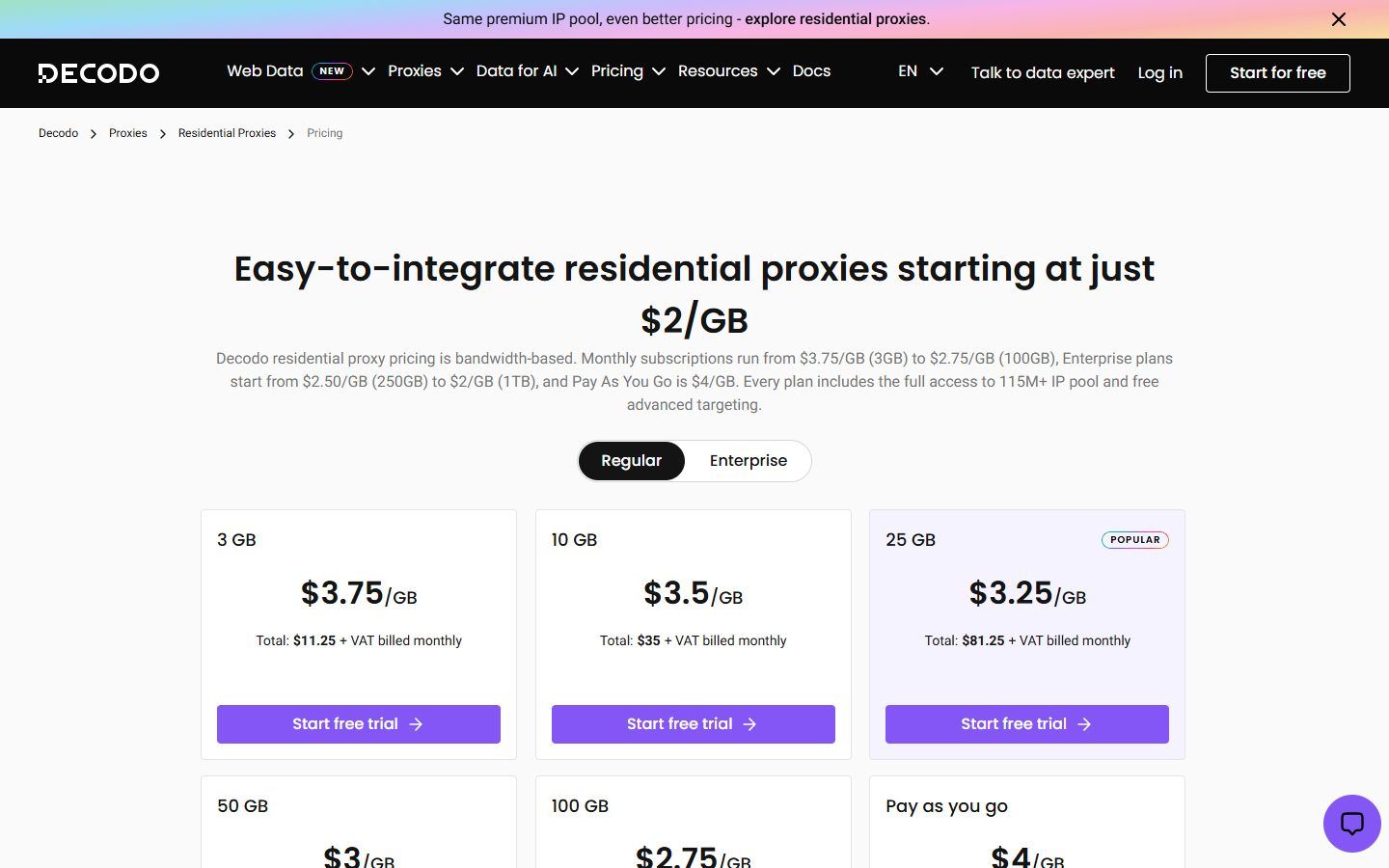
Decodo is the rebrand of Smartproxy, and it remains the sweet spot between price and quality. Every plan gets the full 115M+ IP pool and advanced targeting, with no "premium pool" upsell.
Decodo residential pricing, October 29, 2026.
Pros
Mid-range price with no feature gating: $3.75/GB at 3 GB, $2.75/GB at 100 GB
3-day free trial with 100 MB, plus a 14-day money-back option on regular plans
Pay As You Go at $4/GB for one-off jobs
Cons
PAYG needs a Wallet top-up and is bought 1 GB at a time
The trial auto-converts to a paid plan if you don't cancel
Best for:
Developers and small teams who want premium-grade residential proxies without enterprise pricing.
4. SOAX: one rate for residential and mobile
SOAX rebuilt its pricing around credits and tiers. The interesting part: one rate across residential and mobile, which is unusual, since mobile proxies are normally billed at a premium.
SOAX pricing, October 29, 2026.
Pros
Free Sandbox plan to start, no sales call required
Mobile IPs at the same price as residential
Volume rates go down to $0.35/GB on Tier 3 for Enterprise
Cons
Three price tiers per plan make cost estimation harder
Real plans start at $200/month
Best for:
Projects that need mobile IPs (social media, app APIs) without paying mobile-proxy prices.
5. IPRoyal: pay-as-you-go for small projects
IPRoyal targets freelancers and small teams. It offers both subscriptions (5% off) and Pay As You Go, with a 64M+ IP pool across 195+ countries.
IPRoyal residential pricing, October 29, 2026.
Pros
Buy exactly 1 GB if that's all you need, no commitment
Timed auto-rotation and instant IP changes
Volume price falls to $1.75/GB
Cons
$7/GB at 1 GB is the highest entry price on this list
The headline $1.75/GB only applies from 10 TB
Best for:
Irregular or one-off scraping jobs where a monthly plan would go to waste.
6. Webshare: the budget pick
Webshare is the provider most developers try first, and for good reason: 10 datacenter proxies are free forever, and rotating residential starts at $3.50/GB for a single gigabyte.
Webshare rotating residential pricing, October 29, 2026.
Pros
Cheapest provider at 10 GB/month ($27.50)
80M+ residential IPs in 195 countries, targetable by country, city, state, ZIP or ASN
Free tier with 10 datacenter proxies to prototype
Cons
The "$7.00 → $3.50" discount framing makes the list price look higher than it is
Fewer enterprise extras (unlocker APIs, datasets) than the top three
Best for:
Side projects, MVPs and anyone testing whether their scraper needs residential IPs at all.
7. Rayobyte: the lowest cost per GB at volume
Rayobyte (formerly Blazing SEO) states that it owns its residential network and that every IP comes from a device whose owner opted in. It has two very different residential products.
Rayobyte residential pricing, October 29, 2026.
Pros
Premium Residential PAYG from $3.50/GB, dropping to $0.50/GB at high volume
Scale Residential: $100/month for 6,600 GB, down to $0.0095/GB
Clear, public statement on how IPs are sourced
Cons
Scale Residential has no geo-targeting and requires a compliance review
Concurrency is tied to plan size (1 concurrent request per $1 of plan)
Best for:
High-volume scraping (hundreds of GB to TBs) where targeting matters less than cost.
How to benchmark proxies in Python
Marketing pages claim 99%+ success rates everywhere. The only number that matters is the success rate on the site you scrape.
This script sends the same requests through each provider's rotating gateway and reports success rate, blocks, median latency and whether the exit IP really rotates.
pip install requests
import os
import time
import statistics
import requests

# One rotating-gateway URL per provider, copied from each dashboard:
# http://USERNAME:PASSWORD@GATEWAY_HOST:PORT
PROXIES = {
    name: os.environ[var]
    for name, var in {
        "Bright Data": "BRIGHTDATA_PROXY",
        "Oxylabs": "OXYLABS_PROXY",
        "Decodo": "DECODO_PROXY",
        "SOAX": "SOAX_PROXY",
        "IPRoyal": "IPROYAL_PROXY",
        "Webshare": "WEBSHARE_PROXY",
        "Rayobyte": "RAYOBYTE_PROXY",
    }.items()
    if os.environ.get(var)
}

TARGET = "https://books.toscrape.com/"  # swap for the site you actually scrape
REQUESTS_PER_PROVIDER = 20
BLOCK_CODES = {403, 407, 429, 503}


def benchmark(proxy_url: str) -> dict:
    ok, blocked, errors, latencies, ips = 0, 0, 0, [], set()
    proxies = {"http": proxy_url, "https": proxy_url}

    for _ in range(REQUESTS_PER_PROVIDER):
        start = time.perf_counter()
        try:
            r = requests.get(TARGET, proxies=proxies, timeout=20)
            elapsed = time.perf_counter() - start
            if r.status_code == 200:
                ok += 1
                latencies.append(elapsed)
            elif r.status_code in BLOCK_CODES:
                blocked += 1
            else:
                errors += 1
        except requests.RequestException:
            errors += 1

    # Check that the gateway really rotates the exit IP
    for _ in range(5):
        try:
            ips.add(requests.get("https://api.ipify.org", proxies=proxies, timeout=15).text)
        except requests.RequestException:
            pass

    return {
        "success_rate": ok / REQUESTS_PER_PROVIDER * 100,
        "blocked": blocked,
        "errors": errors,
        "median_s": statistics.median(latencies) if latencies else float("nan"),
        "unique_ips": len(ips),
    }


if __name__ == "__main__":
    if not PROXIES:
        raise SystemExit("Set at least one *_PROXY environment variable first.")

    print(f"{'Provider':<12} {'Success':>8} {'Blocked':>8} {'Errors':>7} {'Median':>8} {'IPs/5':>6}")
    for name, url in PROXIES.items():
        s = benchmark(url)
        print(f"{name:<12} {s['success_rate']:>7.0f}% {s['blocked']:>8} {s['errors']:>7} "
              f"{s['median_s']:>7.2f}s {s['unique_ips']:>6}")
Set the gateway URL of each provider you're trialing as an environment variable (DECODO_PROXY, WEBSHARE_PROXY…) and run it. Only providers with a variable set are tested, so you can compare two trials side by side without touching the code.
Read the output like this:
Success under 90% on your target: that pool is burned for that site. Try another provider before tuning your code.
Many 429s: the IPs are fine, your request rate isn't. Slow down or add concurrency across more IPs.
IPs/5 equal to 1: you're on a sticky session. Check the session parameter in the proxy username.
Use books.toscrape.com only to validate the setup. Then point TARGET at the real site, because a provider that works on Amazon can fail on LinkedIn and the other way around.
How to choose: a quick decision guide
Under 10 GB/month, testing an idea → Webshare (or its free datacenter proxies first).
Production scraper, small team, 10–200 GB → Decodo.
Enterprise, compliance reviews, many targets → Bright Data or Oxylabs.
Social media or app endpoints → SOAX (mobile at residential price).
One-off job, no subscription → IPRoyal or Decodo PAYG.
Terabytes, little need for geo-targeting → Rayobyte Scale.
And whatever you choose: scrape public data, respect each site's terms and rate limits, and keep personal data out of your datasets unless you have a legal basis for it. Proxies hide your IP, not your responsibility.
Key takeaways
The proxy type decides more than the provider: rotating residential is the default for scraping in 2026.
Compare the effective cost at your volume, not the "from $X/GB" banner. At 10 GB/month the gap between cheapest and most expensive is almost 4x.
IP sourcing is a reliability feature. NetNut's seizure showed that an unethical pool can disappear overnight.
FAQs
❓ What is the best proxy for web scraping?
✅ For most developers, rotating residential proxies from Decodo offer the best balance of price ($2.75–$3.75/GB on monthly plans), pool size (115M+ IPs) and features. At enterprise scale, Bright Data and Oxylabs are the standard choices.
❓ Are residential proxies better than datacenter proxies for scraping?
✅ For sites with anti-bot protection, yes. Residential IPs belong to real devices, so they're far less likely to be blocked. Datacenter proxies are cheaper and faster, and they're enough for sites without bot detection or for public APIs.
❓ How much do proxies for web scraping cost?
✅ Rotating residential proxies cost roughly $2.75–$8 per GB on small plans in 2026, and can drop below $1/GB at very high volume. A small production scraper using 10 GB a month typically pays between $27.50 and $100.
❓ Is there a free proxy for web scraping?
✅ Webshare gives 10 datacenter proxies for free, SOAX has a free Sandbox plan, Decodo offers a 3-day trial and Oxylabs gives $5 of credit. Avoid public free proxy lists: they're slow, already blocked and can inspect your traffic.
❓ Is web scraping with proxies legal?
✅ Using proxies is legal, and scraping publicly available data is generally allowed in many jurisdictions. What can create legal risk is ignoring a site's terms, bypassing logins, or collecting personal data without a legal basis. When in doubt, check with a lawyer for your specific case.
Final thoughts
Most scrapers don't fail because of bad code.
They fail because of bad IPs.
Choose the proxy type first, measure the real cost at your volume, benchmark on your own target, and only work with providers who can tell you where their IPs come from.
If you're a software or API company looking to explain your product through high-quality educational content (not marketing fluff), feel free to connect with me on LinkedIn.
 Bright Data residential pricing (archived September 24, 2026). Its site was returning 502 errors when I checked on October 29, so prices may have changed.
 Oxylabs residential pricing, October 29, 2026.
 Decodo residential pricing, October 29, 2026.
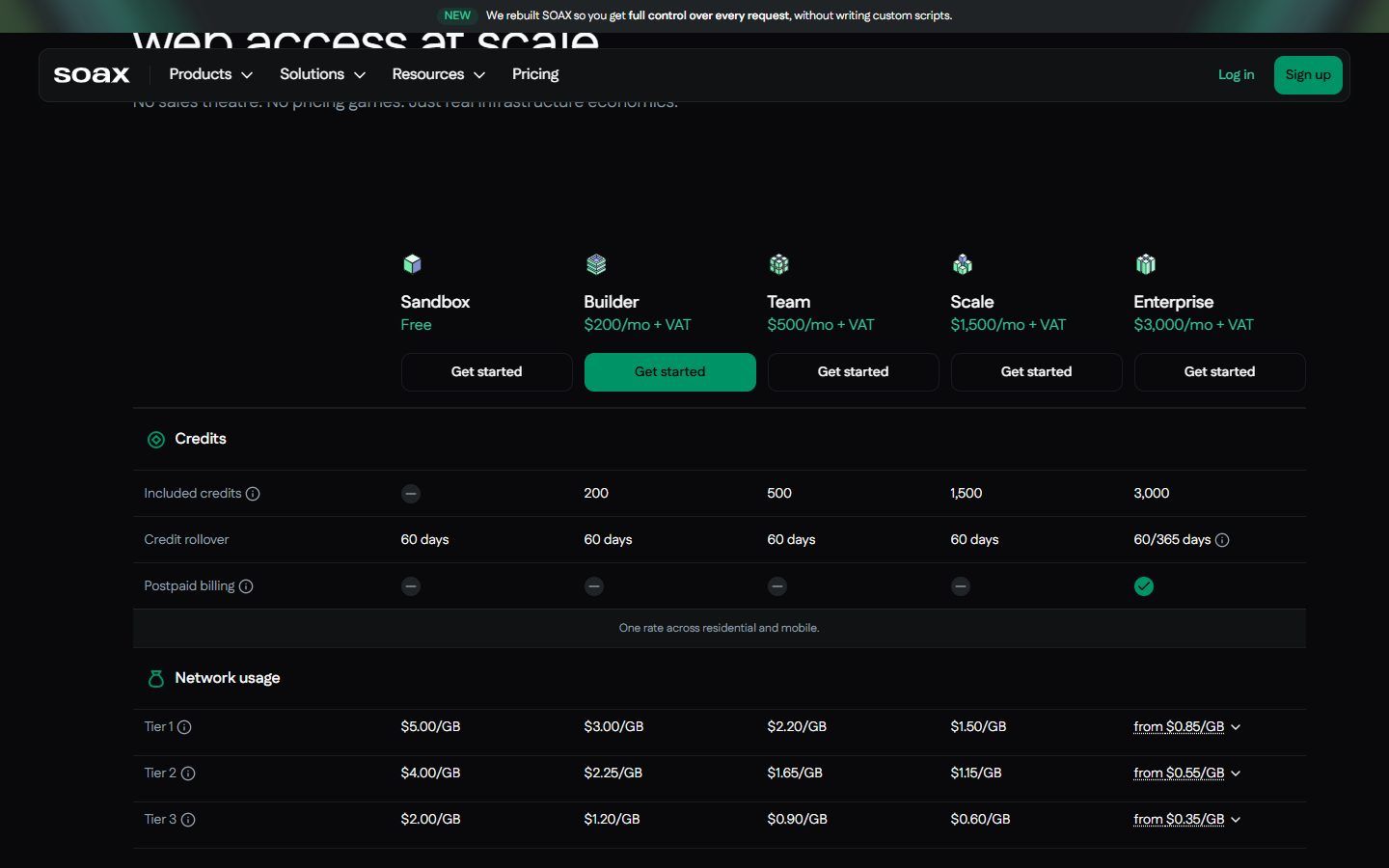 SOAX pricing, October 29, 2026.
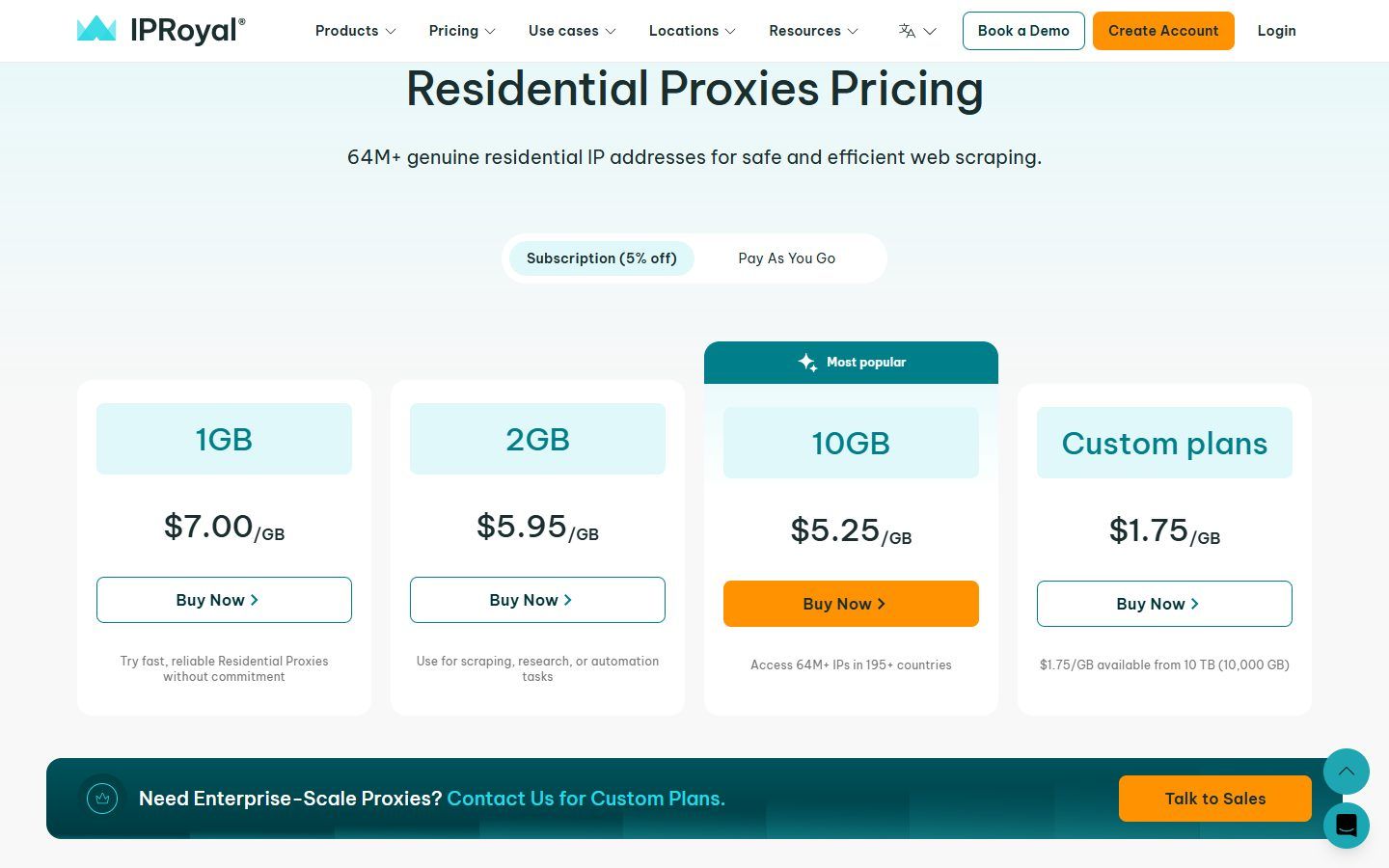 IPRoyal residential pricing, October 29, 2026.
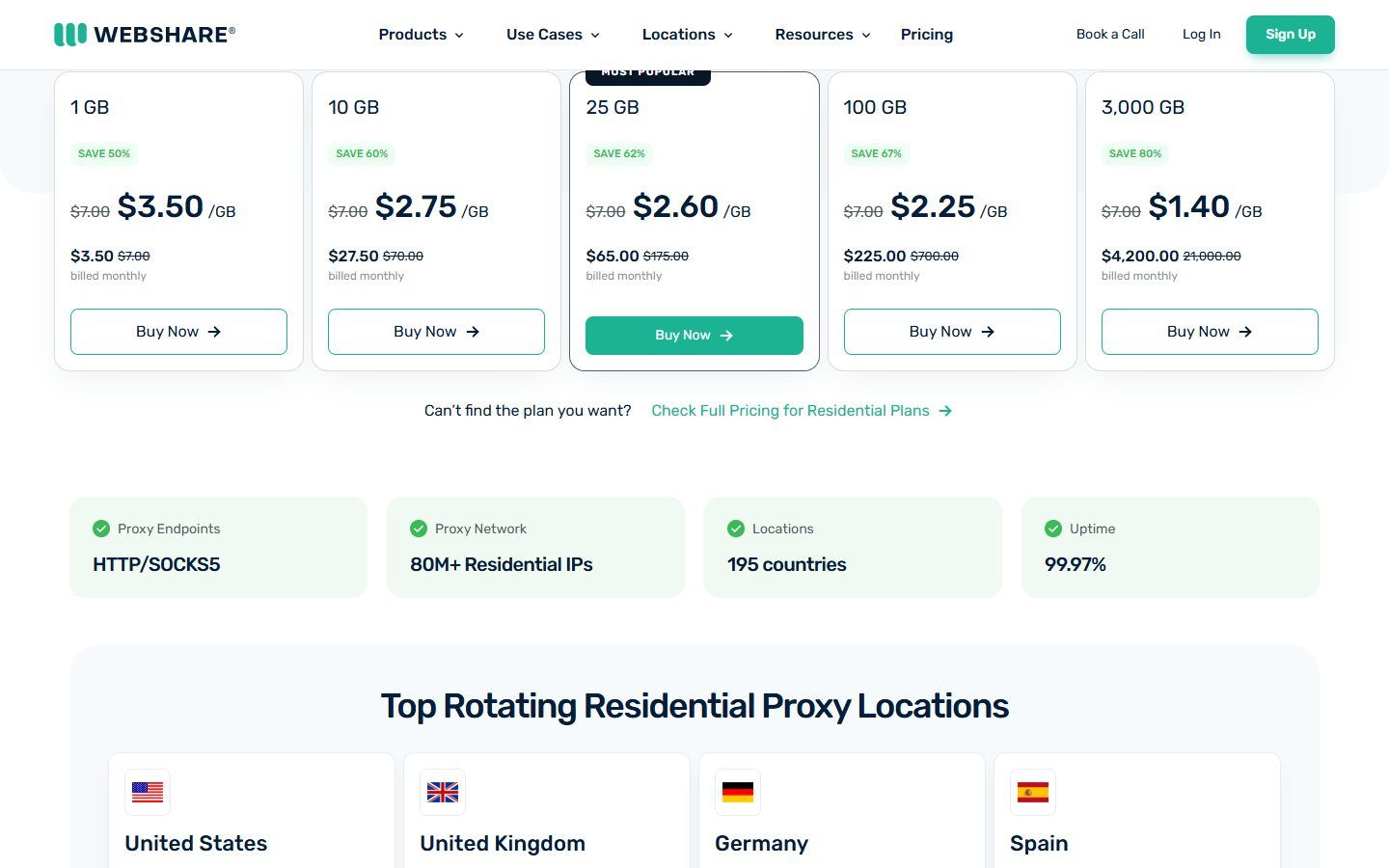 Webshare rotating residential pricing, October 29, 2026.
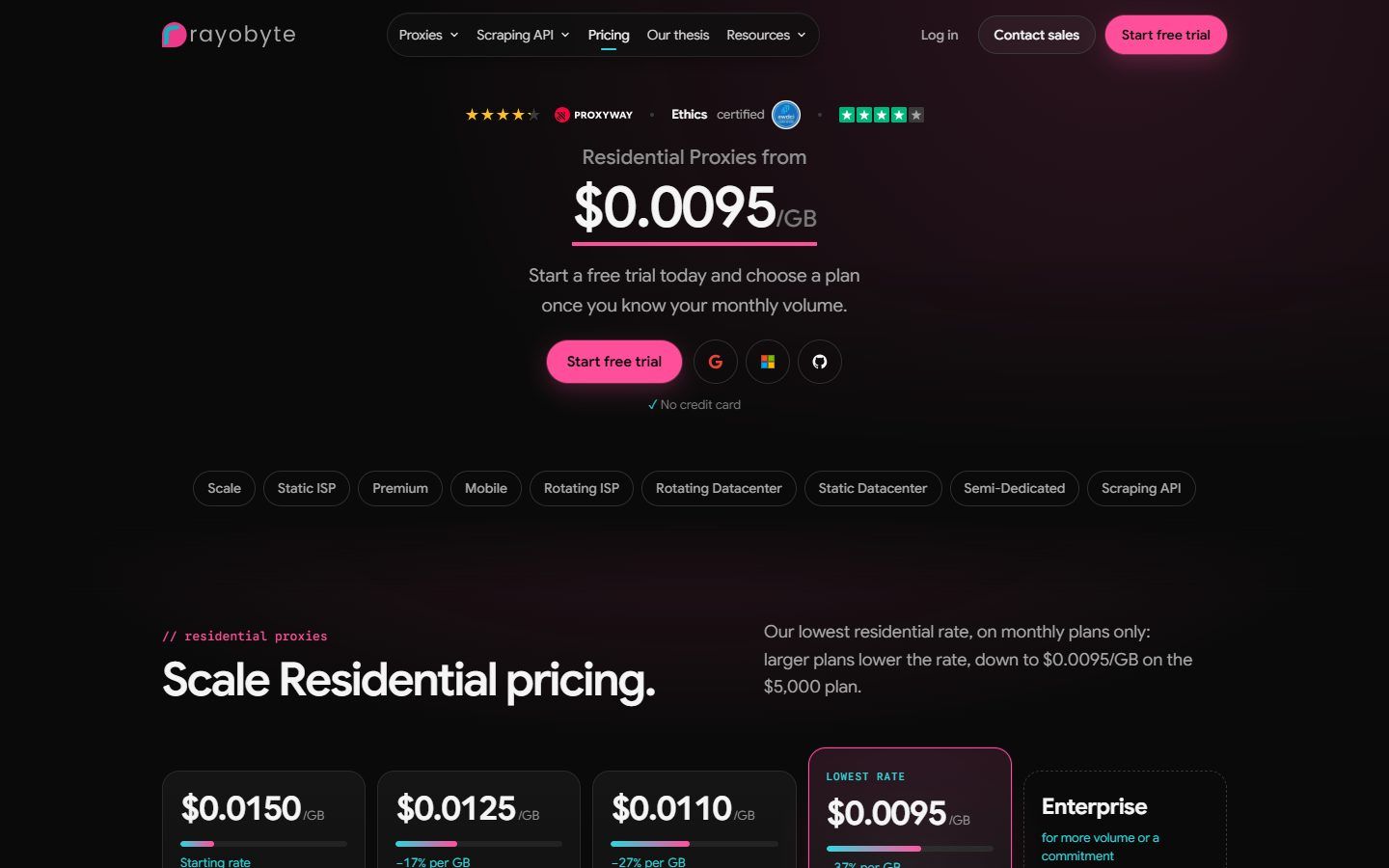 Rayobyte residential pricing, October 29, 2026.